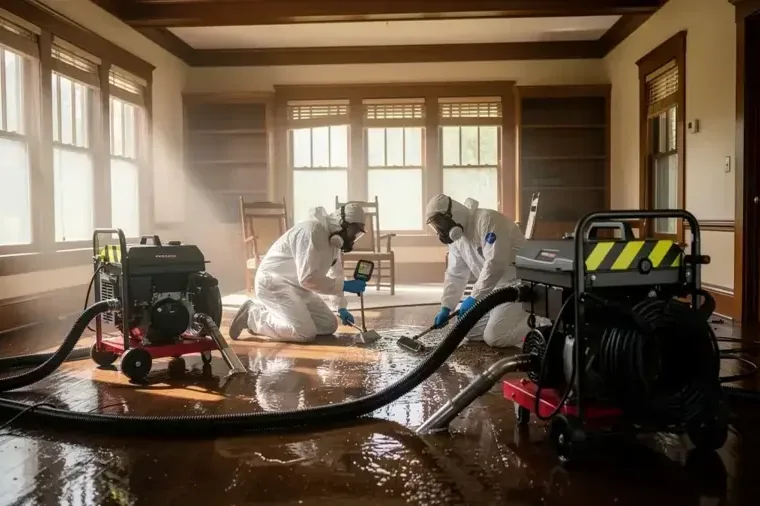
A sewage backup can spread beyond the visible pool through splashes, footsteps and moved belongings. The response begins by restricting access, locating the backup point and marking contaminated surfaces before removal, cleaning and drying equipment enter the affected rooms.
Key takeaways
- Restricted access helps keep contamination out of dry rooms.
- Indoor sewage begins as Category 3 water and requires restricted access.
- The affected boundary includes splashes, tracked footprints and contacted contents.
- Porous removal and physical cleaning come before drying equipment.
- Drain repair and restoration remain separate work scopes.
Locating the backup and protecting clean rooms
A plumbing professional investigates the drain source while cleanup personnel document indoor contact. The first boundary includes water marks, splashes and the route taken by anyone who crossed the affected room.
Those observations help define where containment and cleaning are needed before porous materials are removed.
Service covers Harker Heights, including the Purser Family Park area and southern parts of the city toward Stillhouse Hollow Lake on the Lampasas River. At a sewage loss, equipment and debris need a controlled route through the building.
Dry rooms are protected while the source is checked and contacted contents are recorded.
- The backup point starts the source investigation.
- Clean access routes stay separate from removed debris.
- The plumber and cleanup team coordinate around returning wastewater.
Why sewage receives Category 3 controls
Sewage can contain pathogens and other contamination. Even shallow water can create a larger work area when occupants walk through it or move wet belongings into clean rooms.
The sewage cleanup service begins with containment, PPE and a mapped contact boundary. Household fans are delayed because air movement can distribute untreated contamination.
- Keep children and pets out.
- Avoid household vacuums and fans.
- Do not carry wet porous items through clean rooms.
- Photograph the backup point from a protected position.
Building the complete contamination boundary
The visible pool is only one part of the assessment. Personnel record the highest contact, splashes, footprints, tool routes and contents that were moved after exposure.
Carpet, pad, gypsum and insulation can retain sewage internally. Contact and capillary movement support removal above the visible water mark when needed for safe access and reliable cleaning.
- Direct water contact.
- Tracked traffic beyond the room.
- Porous layers behind finishes.
- Contents placed on clean surfaces.
Clean and dirty travel paths
Workers and debris use a controlled route. Clean storage and occupant movement remain beyond containment so cleanup does not expand the affected area.
Cleaning must happen before structural drying
Retained concrete, framing and durable finishes first receive physical soil removal. An EPA registered antimicrobial can then be applied according to its label, including stated dwell time and any rinse instruction.
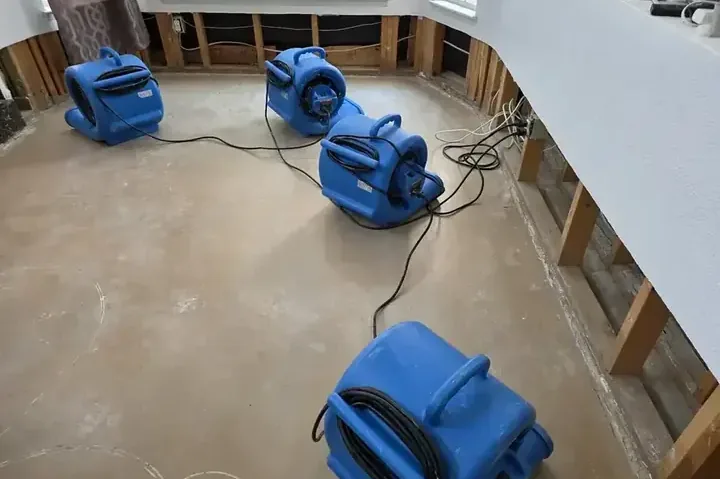
Only after removal and documented treatment should drying equipment address retained moisture. That order prevents air movers from distributing material that has not been cleaned.
- Remove physical soil.
- Apply the labeled product correctly.
- Record dwell and rinse steps.
- Begin controlled drying after treatment.
The drain repair belongs to another trade
A qualified plumber or the proper public authority investigates the source. Restoration personnel document whether the backup has stopped while focusing on contaminated interiors.
Drain findings identify the obstruction or failed component and the trade responsible for correction. The cleanup record separately maps indoor contact, removed porous layers and the surfaces that received physical cleaning.
Keeping those records together helps the property contact follow both work scopes.
- Keep drain findings in the source record.
- Keep contaminated material decisions in the restoration record.
- Source findings remain attached to the indoor contamination record.
Closing the work area responsibly
The file should show the original boundary, removed materials, cleaning method, product directions and the moisture results for retained construction. Equipment removal follows material goals after contamination work is complete.
The water extraction page describes liquid removal for other sources, while the main restoration overview connects the full service range. Sewage retains its Category 3 sequence throughout.
- Confirm the source remains controlled.
- Preserve removal and treatment photos.
- Record final readings at the original points.
- Identify reconstruction that remains.
What daily sewage documentation should contain
Category 3 work benefits from a clear daily record because the contamination boundary, removed materials and cleaned surfaces can change as access improves. Each entry should identify which room was worked, what material was handled and whether containment remained in place.
Broad statements such as cleanup continued do not explain the actual control measures.
Removal photographs should show the contacted porous material and the remaining edge before debris leaves the zone. Cleaning notes should identify physical soil removal separately from antimicrobial application.
Product directions, dwell time and rinse requirements belong with the specific retained surfaces that received treatment.
When later inspection finds contamination beyond the first boundary, personnel can expand containment and explain the evidence. A footprint, wet backing or moved item supplies a reason.
This is more defensible than applying a standard room size or removal height without direct contact findings.
Air quality concerns do not replace surface cleaning, and odor alone cannot confirm that contamination is gone. The physical work remains focused on contacted materials, accessible surfaces and controlled movement.
Personnel should avoid fragrance based decisions or attempts to cover odor while porous sewage contact remains. After debris removal, detailed cleaning reaches edges, fastener areas and transitions that can hold soil.
Treatment products must stay within their labeled uses, with the required wet contact period preserved in the job record. When a surface cannot be reached or treated reliably, additional access or removal may be necessary.
Final moisture readings do not erase incomplete contamination work, so both parts of the file must be closed. One record shows containment, removal and treatment; the other shows how retained construction dried afterward.
Together they explain why barriers and equipment were removed in the chosen order.
- Identify rooms and containment status each day.
- Photograph removal boundaries before debris transport.
- Record cleaning steps in their actual order.
- Connect product use with labeled surfaces and instructions.
Contents need exposure categories too
Hard items, absorbent belongings and specialist equipment do not receive one shared decision. Photographs, material type, contact and destination allow each group to be cleaned, evaluated or discarded without mixing it into protected storage.
- Keep original room identification.
- Note direct or transferred contact.
- Document the destination after movement.